Why Mediocrity is a Mental Illness
Exploring the Psychological Consequences of Under- and Overachieving

“For this is how things are: the diminution and leveling of…man constitutes our greatest danger, for the sight of him makes us weary. We can see nothing today that wants to grow greater, we suspect that things will continue to go down, down, to become…more comfortable, more mediocre, more indifferent.”
Nietzsche, On the Genealogy of Morality
Mediocrity is a mental illness. It breeds a sick mind, a weak body, a wasted life, and it contributes to cultural stagnation. In this article, we are going to investigate the mediocrity that infects so many people today, and we will examine how it can be cured.
“Modern psychology does not yet include mediocrity among its clinical categories, yet there can be no doubt that it is a stultifying and infectious disorder that permanently disables…mediocrity is a pathology that essentially limits the mediocre person, obstructing the individual from becoming—in important, higher, ways—more than he or she is…”
Stephen James Bartlett, Normality Does Not Equal Mental Health
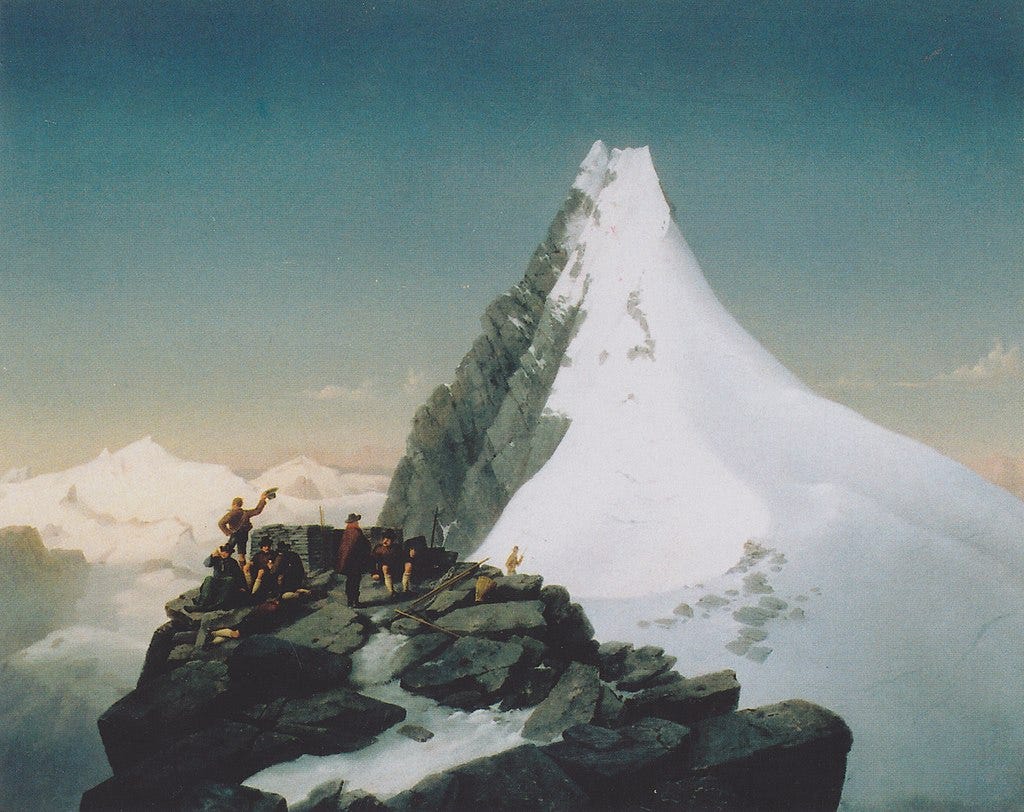
The word mediocrity comes from the Latin word mediocris, which means “halfway up the summit of a mountain”. The origin of the word conveys the idea that to be mediocre is to settle for a life far below our potential and to live absent ideals, for as Bartlett explains: ”…mediocrity is fundamentally a psychological incapacity for ideals.” (Stephen James Bartlett, Normality Does Not Equal Mental Health) Ideals are visions of perfection we hold in our mind regarding who it is we want to become, and what it is we want to achieve. As perfection is unattainable, ideals are never fully realised, but their value lies in their power to inspire and propel us into purposeful action. Or as José Ingenieros explained in his book The Mediocre Man:
“Ideals, since they are anticipated visions of the future, influence our behaviour and become the natural instrument of all human progress…Ideals are a vector towards that which is best…An ideal is faith in the very possibility of perfection…It is not a goal, rather a path. Without ideals, human betterment would be impossible.”
José Ingenieros, The Mediocre Man
Instead of walking a path shaped by ideals, that allows them to develop in body and mind, the implicit goal of mediocre people is to attain a satisfactory level of material comfort and social status – and with as little effort as possible. At work they do the bare minimum to keep their job, or else to slowly climb the corporate ladder. When the duties of work are over the mediocre gravitate to passive pastimes, such as playing video games, scrolling through social media, binge-watching shows and movies, or chatting with others about trivial things. This way of life precipitates a slow death, for as the American writer William Burroughs observed:
“When you stop growing you start dying.”
William S. Burroughs, Junky
In failing to set aside time each day to engage in activities which cultivate critical thinking, increase their knowledge, and challenge their understanding of self and world, the minds of mediocre people deteriorate.
“Those who do not cultivate their mind, go straight to the disintegration of their personalities.”, wrote Igenerios, “Not fighting one’s ignorance is to perish. The fertile terrains become populated by brush and weeds if not cultivated; the routine spirits become colonized by prejudices, which enslave them.”
José Ingenieros, The Mediocre Man
Mediocrity also harms the body. Lacking an ideal of peak bodily health to aim at, mediocre people easily give in to the temptations of sugars, processed foods, alcohol, and drugs. Instead of exercising and leading the active life the body needs to be healthy, the mediocre also succumb to laziness, which Carl Jung called “the greatest passion of mankind, even greater than power or sex or anything.” This neglect and poisoning of the body leads to lethargy, depression, and disease. It breeds aesthetically unpleasing bodies and diminishes the amount of beauty in the world. And perhaps worst of all, through the mechanism of epigenetic heritability – wherein the poor lifestyle choices of parents result in damaging genetic modifications which are then passed onto offspring – physical mediocrity endangers the future of the human species.
“The Greeks referred to physical arete, the cultivation of excellence of the body and its functioning. Physical mediocrity is its opposite. Physical mediocrity is characterized by obesity…by drug and excessive alcohol use…and by avoidance of exercise.”
Stephen James Bartlett, Normality Does Not Equal Mental Health
Mediocrity also generates an impoverished character. As a result of their desire to coast through life with as little effort as possible, mediocre people fail to cultivate the moral autonomy and courage needed to realize the ideal of individuality. In traversing the river of life, they go with the societal flow and sculpt their character by imitating others and conforming to social trends. Rather than following their conscience and speaking the truth, they follow the crowd and say what is politically correct and socially acceptable. They develop one-dimensional collective personalities that are deficient in the variegated individuality that is a precondition of psychological health. And then to hide this character deficiency from themselves and others, mediocre people feign individuality by displaying uniqueness in superficial matters such as the clothes they wear or the pictures they post on social media.
“…mediocrity can be defined as an absence of personal characteristics that make it possible to distinguish the individual in his or her society.”
José Ingenieros, The Mediocre Man
Or as Ingenieros further writes:
“The mediocre man is a shadow projected by society; is, essentially imitative and is perfectly adapted to live with the herd, reflecting the routines, prejudices and dogmatisms acknowledged as useful for the domesticity… His characteristic is to imitate those who surround him: to think with other’s head and be incapable of forming their own ideals… [The mediocre] parade unnoticed…vegetating in society which ignores their existence: Zeros that qualify nothing and count nothing.”
José Ingenieros, The Mediocre Man
If mediocrity was merely damaging to mental health, compassion for the sick would be warranted. However, mediocrity has a destructive element; those afflicted with it have a tendency to envy, ridicule, and even hate those who try to rise above the herd and do something exceptional with their lives.
“The mass crushes beneath it everything that is different, everything that is excellent, individual, qualified and select. Anybody who is not like everybody, who does not think like everybody, runs the risk of being eliminated.”
José Ortega y Gasset, The Revolt of the Masses
As human progress is dependent on exceptional individuals who challenge the philosophical, political, scientific, artistic, and physical health paradigms of a society, the tendency of mediocre people to crush everything that is different, excellent, and individual, is contributing to the demise of culture and holding humanity back. In the words of Bartlett, the contemporary epidemic of mediocrity is functioning as “humanity’s ball and chain”. Or as he further wrote:
“The psychology of mediocrity not only limits the individual development of those who are mediocre but it would place fetters on others who excel, and, when mediocrity becomes dominant in a population, it turns society into mediocracy, obstructing its advancement.”
Stephen James Bartlett, Normality Does Not Equal Mental Health
With advances in artificial intelligence, soon people will have the opportunity to offload many of their cognitive and creative tasks onto algorithms, thus making it even easier to be mediocre. The spectre of a technologically-driven mediocracy – of a society held down by mediocre people who use artificial intelligence to support their mediocrity – looms on our horizon.
For the sake of our own mental health, as well as the health of society, it is vital that more of us escape mediocrity. And to do this we need to orient our life around self-chosen ideals. With respect to our intellectual, physical, moral, social, and creative capacities, we need to construct a clear and ambitious vision of the person we want to become, and of what it is we want to experience and achieve. The sum of these ideals constitutes our higher self.
“…why do you hide yourself? It is the Higher Man that cries for you!”
Nietzsche, Thus Spoke Zarathustra
Or as José Ingenieros writes:
“When your visionary bow aims towards the stars and you unfold your wings towards such unreachable loftiness, eager of perfection and rebellious to mediocrity, you carry deep within, the mysterious spring of an Ideal. It is a sacred ember, capable of annealing you for great deeds. Guard it! If extinguished, it will not re-ignite. And if it dies, you are left inert; cold human rubbish.”
José Ingenieros, The Mediocre Man
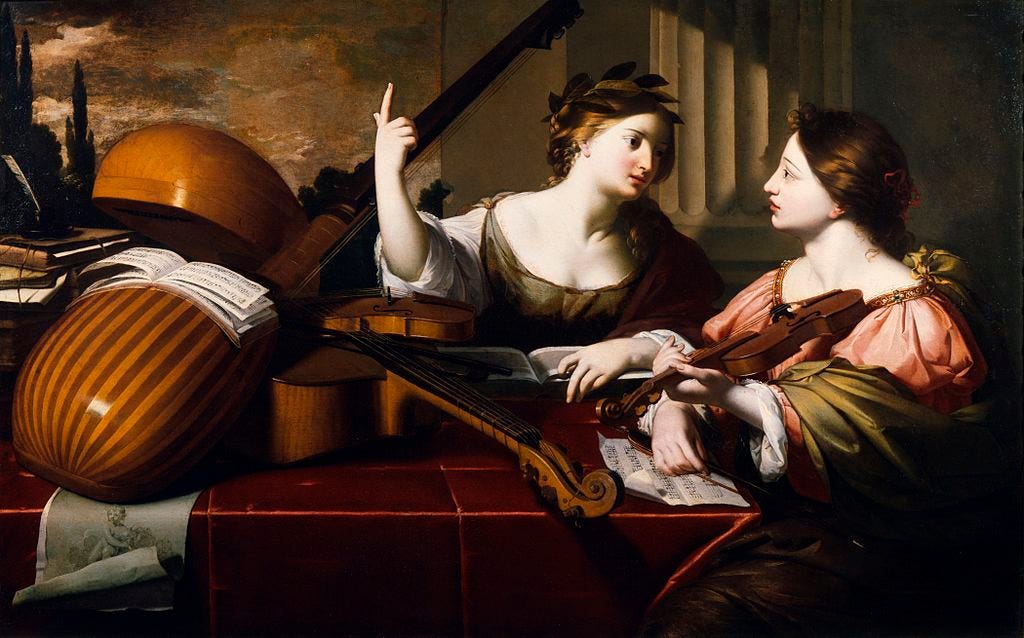
It can be useful to imagine what our life will be like if we do not incessantly work to realize this higher vision of ourselves. We will approach old age burdened by the knowledge that we wasted our time and potential. We will exist as but another mediocre person who, in all important matters, is virtually indistinguishable from millions of other mediocre people. And we will live with the shame of lacking a character, a body, and a set of achievements and experiences we can be genuinely proud of. If the idea of such a life fills us with dread, then we can use this dread to motivate us to run full speed away from mediocrity, and towards our higher self.
“…the best stimulus for running ahead is to have something we must run from.”
Eric Hoffer, The Passionate State of Mind
Or as the philosopher Richard Taylor wrote:
“What, then, if you waste a lifetime? People do. Perhaps most do…they go to their graves having done nothing with themselves, living from one day to the next, sleeping, waking, eating, toiling, begetting, and that is it. They are much the same at age seventy as they were at age twenty – with the same ideas and attitudes, the same limitations, having made no attempts to remove them… But, unless you were born a fool, there are gifts that you have…and your task is to nourish and perfect those gifts. Your reward will be some measure of achievement and greatness – not, perhaps, in such things as wealth and position, but in something far more precious, namely, greatness as a human being.”
Richard Taylor, Restoring Pride
The Unseen Danger of Overachievement
At the other end of the spectrum lies overachievement, a condition that is equally, if not more, detrimental to one’s mental well-being. While mediocrity induces a state of lethargy and complacency, overachievement fosters an incessant striving that knows no bounds or limitations. Just as the mediocre fail to cultivate their inherent talents and potentials, the overachiever is ensnared by an insatiable thirst for more — more accolades, more validations, more instances of so-called "excellence".
"Perfectionism is not the same thing as striving to be our best. Perfection is not about healthy achievement and growth."
Brené Brown, The Gifts of Imperfection
Perpetually chasing after ever-higher summits, the overachiever becomes a slave to their own ambitions. Each accolade is but a fleeting moment of joy, quickly overshadowed by the anxiety and restlessness that stem from the pursuit of the next objective. The toxic cycle of overachievement serves not only to dismantle one’s peace of mind but also alienates them from meaningful relationships, as their personal life often takes a backseat to their ambitions.
It is crucial to understand that this form of incessant striving can manifest into mental illnesses such as obsessive-compulsive disorder, generalised anxiety disorder, or even severe depression. The danger here is that society often glorifies overachievement, masking its destructive capabilities behind a facade of "success".
"The science of psychology teaches that a man’s greatest enemy is himself, that when he relies upon his own judgment he sometimes aspires to things which bring him ruin; whereas, when he distrusts himself, he shuns danger and his very fear aids in his preservation."
Giovanni Boccaccio, The Decameron
Just like mediocrity, overachievement can also perpetuate a cycle of societal and cultural degradation. Where mediocre individuals form a dragging anchor, the overachievers often foster an environment of toxic competitiveness, making it difficult for balanced, healthy growth to flourish within the community.
The path to mental well-being is not at either end of the spectrum but somewhere in between. It is this middle ground that we should strive to occupy, a place where we are inspired by ideals but not enslaved by them; a place where we aim for growth and accomplishment but not at the expense of our peace of mind. Whether we incline toward mediocrity or overachievement, the key lies in the harmonious balance of our intellectual, physical, and emotional faculties.
“The middle path is the way to wisdom.”
Rumi